
Choosing the right microphone is one of the most important decisions you can make when setting up an online radio station, podcast, or home studio. The right mic can make your voice sound clear, warm, and professional, while also helping reduce unwanted background noise. But with so many microphones for radio broadcasting available, knowing which one is right for you isn’t always easy. Should you choose a dynamic or condenser microphone? Do you need an XLR connection, or would USB be enough? And how much should you actually spend on a good broadcasting microphone?
In this guide, we’ll take a look at some of the best microphones for radio and podcasting, from affordable options for beginners to professional studio microphones. We’ll also explain the key features to consider so you can choose a microphone that suits your voice, recording environment, and broadcasting setup.
1/ What to look for in a mic
2/ Dynamic vs Condenser microphones for radio
3/ XLR vs USB microphones
4/ Popular microphones for radio
1/ What to Look for in Microphones for Radio
There is no single microphone that is perfect for every radio station or broadcaster. The best choice depends on your budget, your recording environment, the type of content you create, and the rest of your audio equipment. Before choosing a microphone, here are some of the most important features to consider.
Polar pattern
The polar pattern determines which directions a microphone picks up sound from. For radio and voice recording, a cardioid microphone is often a good choice because it focuses on the sound coming from in front of the microphone while reducing sound from the sides and rear.
This can be particularly useful if you’re broadcasting from a home studio or another room that hasn’t been acoustically treated. It helps keep unwanted sounds, such as computer fans, room noise, or other people in the room, from becoming too prominent in your recordings.
Frequency response
A microphone’s frequency response describes the range of frequencies it can capture. For spoken-word content, you generally want a microphone that reproduces voices clearly and naturally, with enough detail to make speech easy to understand.
Sensitivity and gain
Some microphones produce a stronger output signal than others. If a microphone requires a lot of gain, you may need a suitable audio interface or preamplifier to get a strong recording level without introducing excessive noise.
Built-in pop protection
Plosive sounds caused by letters such as “P” and “B” can create unpleasant bursts of air when speaking close to a microphone. A pop filter or integrated pop screen can help reduce these sounds and produce cleaner voice recordings.
Shock protection
Vibrations from your desk, microphone stand, or accidental bumps can easily be picked up during a live broadcast. A shock mount helps isolate the microphone from these vibrations, which can be especially useful for radio hosts who regularly adjust equipment while broadcasting.
2/ Dynamic vs. Condenser Microphones for Radio
One of the first decisions you’ll have to make when choosing a microphone for radio is whether to go for a dynamic or condenser model. Both types can produce excellent results, but they behave differently and are suited to different recording environments.
Dynamic microphones
Dynamic microphones are popular for radio broadcasting because they tend to be less sensitive to surrounding sounds. This makes them a good choice for home studios, untreated rooms, and live broadcasting environments where you don’t have complete control over background noise.
They are also generally robust and can handle high sound pressure levels. Popular broadcasting microphones such as the Rode Procaster and Shure SM7B are dynamic microphones designed with spoken-word applications in mind.
Condenser microphones
Condenser microphones are typically more sensitive and can capture a greater level of detail. This can make them an excellent choice for studio voice recording, podcasts, voice-overs, and radio broadcasts in a relatively quiet and controlled environment.
However, their increased sensitivity can also mean that they pick up more of the surrounding room. Most XLR condenser microphones also require 48V phantom power, so you’ll need a compatible audio interface or mixer.
3/ XLR vs. USB Microphones: Which Is Better for Radio?
You’ll also need to consider how your microphone connects to your computer or audio equipment. XLR microphones are widely used in professional radio studios because they connect to an audio interface, mixer, or other compatible equipment and give you more control over your entire audio setup.
USB microphones, on the other hand, connect directly to a computer and are generally easier to set up. They can be a convenient option for beginners, especially if you’re creating a podcast or starting an online radio station from home and don’t need a more advanced audio setup.
If you plan to expand your setup over time, an XLR microphone can offer more flexibility. You can connect it to different audio interfaces or mixers and add other microphones and audio equipment as your radio studio grows.
4/ Popular Microphones for Radio
Behringer B1
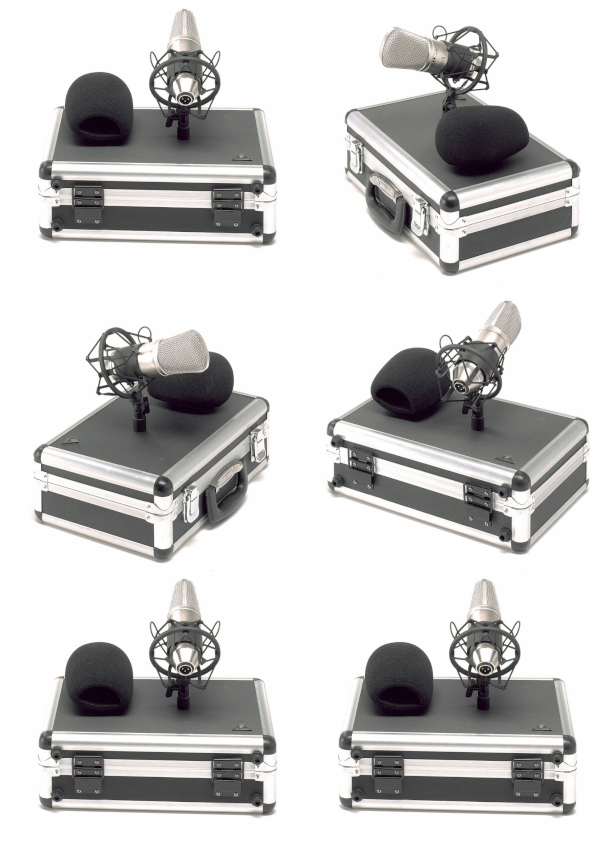
The Behringer B1 is a great XLR condenser microphone, perfect for home recording. Condenser mics are ideal for capturing vocals, and the Behringer is no exception! Thanks to its wider and flatter frequency response, it does a wonderful job at capturing details better than most dynamic microphones. It includes a handy -10dB switch that helps with attenuation, as well as a low-frequency roll-off switch.
Another advantage is the shock mount, wind screen, XLR cable and storage case that come with it! Overall, you get the crisp sound of a studio condenser mic at a price that’s great for home usage.
Purchase the Behringer B1 here!
Audio-Technica AT2020
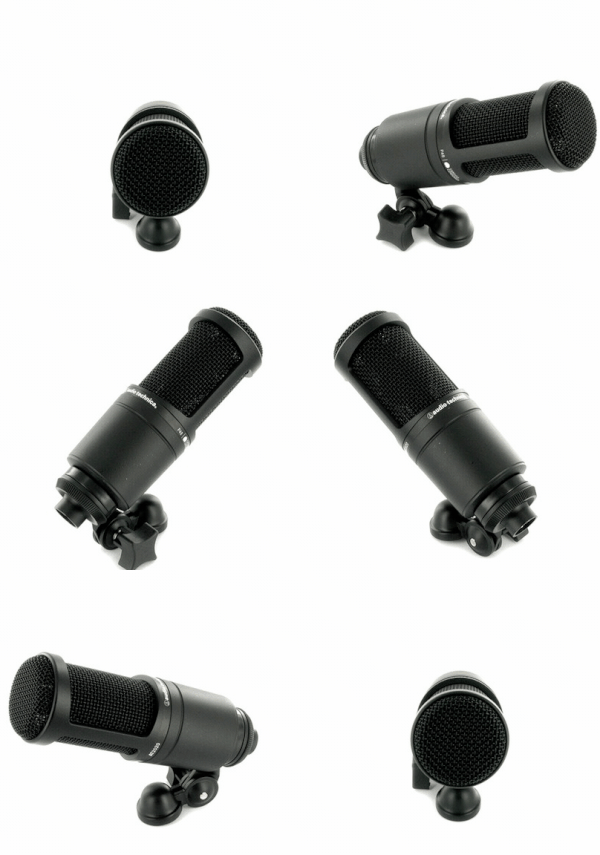
The Audio-Technica AT2020 is a solid XLR microphone that will give you a great sound quality at an affordable price. It’s perfect for picking up voices and acoustic instruments in a studio setting. The cardioid pattern helps reduce any unwanted background noise and focuses on the desired sound.
It comes supplied with a metal swivel-mount and a travel pouch. If you’re looking for a bundle package (including XLR cable and a pop filter) click here. Overall, the Audio-Technica AT2020 is a great all-purpose mic that provides particular richness and warmth when it comes to voice recording.
Purchase the Audio-Technica AT2020 here!
Rode Procaster
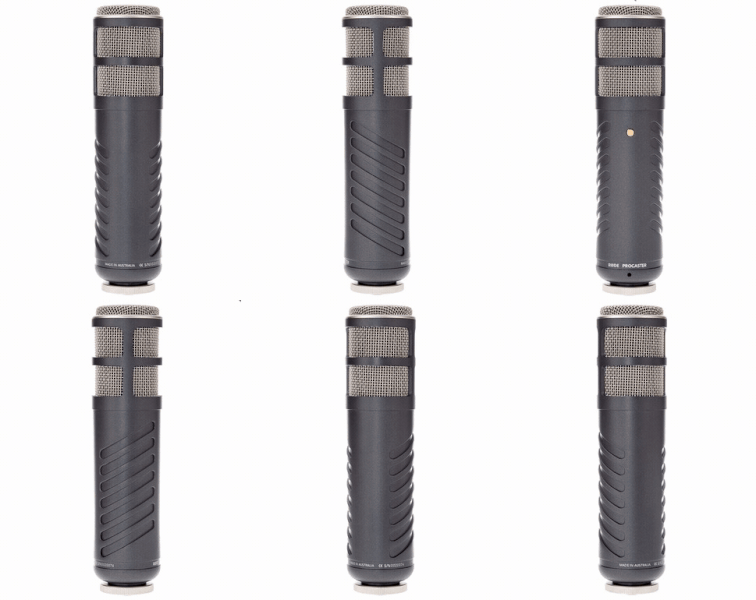
The Rode Procaster (XLR mic) is a personal favourite here at RadioKing! With its cardioid polar pattern, it’s excellent at picking up your voice and blocking out any background noises, so no need to have a professional studio! The internal shock mount helps reduce vibrations traveling up from the floor to the mic stand and it also has an internal pop filter to help reduce any popping sounds. Something to keep in mind is that this mic is pretty gain-hungry, which means that you’ll need to turn your input levels up.
The XLR cable is not provided, you can purchase one here for $3,70. Overall, it’s an excellent microphone that delivers in terms of professional sound quality!
Purchase the Rode Procaster here!
Rode Broadcaster
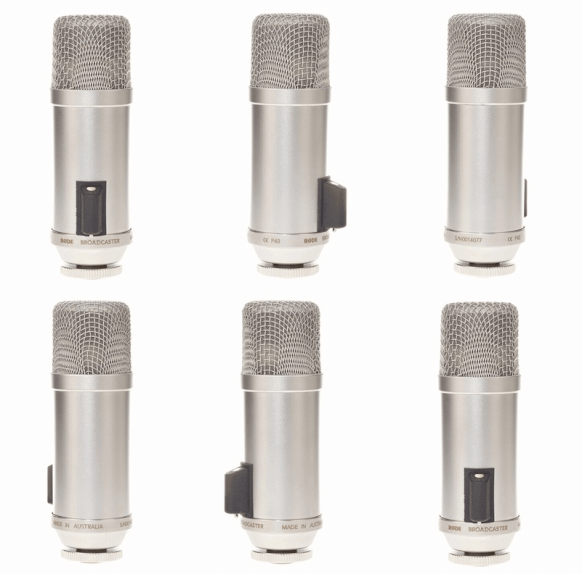
As the name indicated, the Rode Broadcaster was designed for broadcasters and vocal situations. Although it’s a condenser microphone, it proves extremely effective at cancelling out any background noise, even in an acoustically untreated room. It has a high output level which means that, although it does require phantom power, you won’t need to pump up the volume of your audio interface/preamplifier.
Unfortunately, it doesn’t come with an XLR cable or shock mount, so you’ll need to purchase those separately. However, it does include an internal pop filter. Overall, this is a great sounding microphone that is pretty well known for capturing the richness of lower sounds.
Purchase the Rode Broadcaster here!
SHURE SM7B
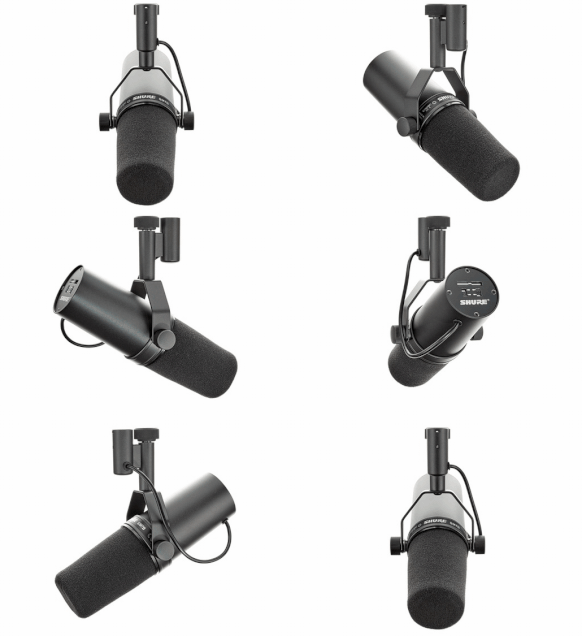
You’ve probably seen this dynamic microphone before, it’s extremely popular when it comes to radio, podcasting and is even used by many YouTubers. The Shure SM7B has an internal shock mount as well as an integrated pop-filter which means you don’t need to spend any extra cash on those accessories. You can find the bundle package (with XLR cable) here.
Overall, the vocal reproduction of this mic is very impressive. Thanks to its cardioid pick up pattern, background noises stay in the background, even if you don’t have a professional set up.
Fun fact: Michael Jackson recorded “Thriller” with the Shure SM7B!
Neumann U87 Ai
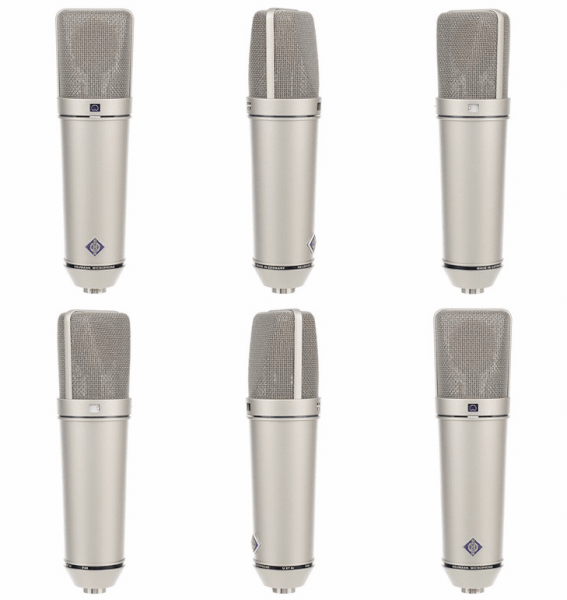
The Neumann U87 Ai is an extremely versatile studio microphone, thanks to the three polar patterns: omni, cardioid, and figure-8. It’s commonly used as a vocal mic and has remained a top favourite in the audio world since its release in 1967!
A 10 dB attenuation switch is located on the rear and an additional switch at the rear allows to change the microphone’s cutoff frequency. This is the most expensive microphone in our list of recommendations, but there is no denying the amazing sound quality that comes with it.
Purchase the Neumann U87 Ai here!
Although having a good microphone will obviously impact the quality of your voice, it’s important to remember that the mic doesn’t do all of the work for you.
The sound processing is also an important part of your audio! In addition to (and prior to) sound processing, amplification is also very important, especially for low impedance microphones (the higher the number, the lower the impedance) output. This means you will need a suitable audio interface/preamplifier to accompany your microphone. Your mic technique will also impact the quality of your audio, so make sure that you’ve researched your microphone in order to understand how to use it efficiently!
Conclusion: Choosing the Right Microphone for Radio
Choosing between the many microphones for radio can feel overwhelming, but the most expensive option isn’t necessarily the best one for your setup. The ideal microphone depends on your voice, your recording environment, your budget, and the equipment you already have.
For many broadcasters, a dynamic cardioid microphone is an excellent starting point, particularly when working in a home studio or a room with background noise. Condenser microphones can also deliver excellent results when used in a quieter, acoustically controlled environment.
Whichever microphone you choose, remember that great radio audio isn’t just about the microphone itself. Your microphone technique, room acoustics, audio interface, gain levels, and sound processing all play an important role in producing a clear and professional broadcast.
Once you have your microphone and audio setup ready, all that’s left is to start broadcasting. With the right tools, you can create your own online radio station, share your voice with your audience, and build a professional-sounding radio experience from almost anywhere.